How Do You Get PrEP on the NHS?
PrEP is free through sexual health services across the UK. Here is what the first appointment involves and how to ask for it.
By Bareback Guide
4 Dec 2025

There is no longer one way to prevent HIV, and that is the single biggest change in gay men's health in thirty years. PrEP, an undetectable viral load, PEP after the fact, doxy-PEP for bacterial infections and barriers all work, all have different failure modes, and most people end up combining two or three rather than picking one. These guides explain what each option actually protects against, what it does not, how effective it is when used properly, and the practical business of getting hold of it in the UK.
PrEP is free through sexual health services across the UK. Here is what the first appointment involves and how to ask for it.
Stop, do not douche, and work out whether PEP applies. The seventy-two hour window is the part that cannot wait.
Provision is targeted rather than general, aimed at people with repeated bacterial infections. Here is what services typically assess.
A risk assessment, a baseline HIV test, blood tests and the first dose, usually within the same visit. Here is the sequence.
A large share of UK diagnoses are still late, meaning years of untreated transmissible infection and considerably worse health outcomes.
It reduces HIV risk modestly and unreliably, and does very little for anything else. Useful as an addition, poor as a plan.
Seven days of daily dosing, or two hours with a double loading dose for anal sex. The difference depends on which tissue needs protecting.
Polyisoprene and polyurethane both work, with different properties. Lambskin does not protect against infection at all.
Within twenty-four hours ideally, and no later than seventy-two. Here is how the timing works across multiple encounters.
Undiagnosed infection accounts for a disproportionate share of new cases. Testing converts an invisible source into a treated one.
A&E provides PEP at any hour, and knowing how to ask makes the difference between being seen quickly and waiting all night.
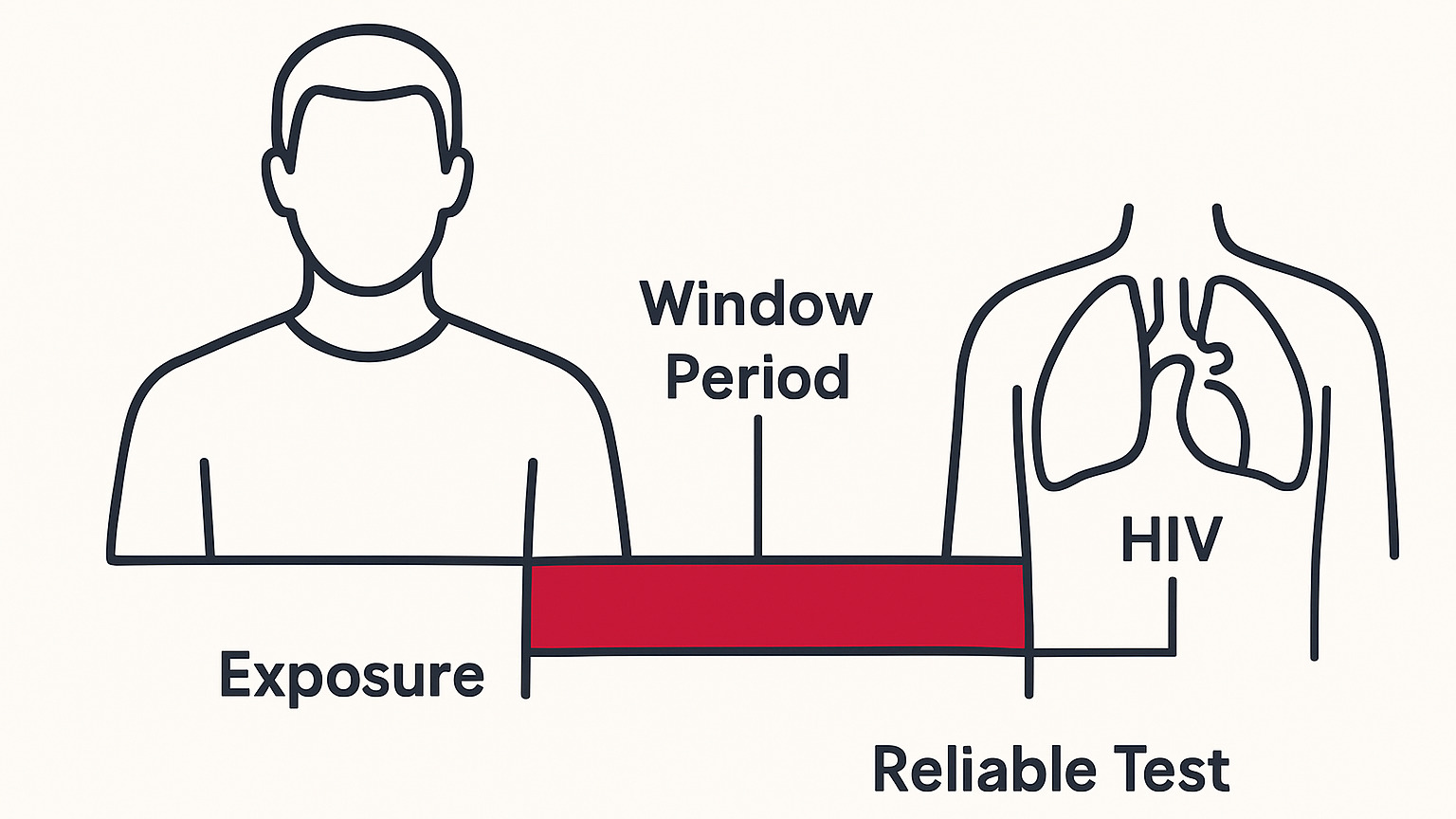
Choosing partners by HIV status was once a common strategy. Undiagnosed infection and window periods are why it worked less well than intended.