
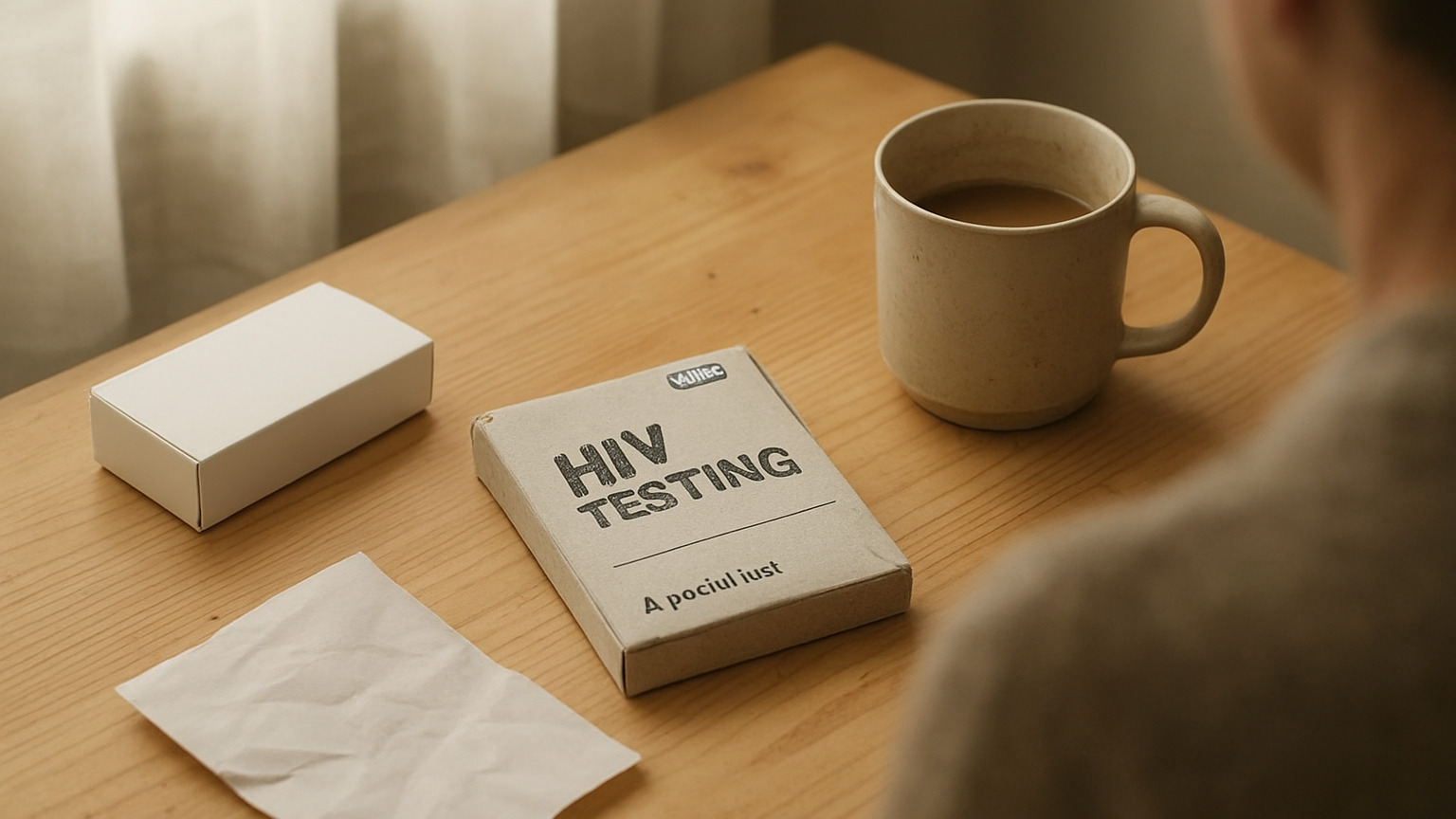
Testing does not prevent HIV directly. What it does is convert an undiagnosed infection, which is transmissible and invisible, into a diagnosed one that will be treated and rendered untransmittable. That conversion is the mechanism by which testing reduces transmission, and it explains why so much effort goes into finding the small number of people who do not know.
Why does undiagnosed infection matter so much?
Because it accounts for a disproportionate share of new infections. Someone who knows their status is usually on treatment and usually suppressed, which removes them as a source entirely. Someone who does not know is untreated by definition. Modelling consistently finds that a large proportion of onward transmission comes from the undiagnosed minority rather than from the diagnosed majority.
What about the first few weeks?
Acute HIV infection is the period of greatest infectiousness, with viral load often in the millions during the first weeks. It is also the period when people are least likely to know, since the seroconversion illness looks like flu and antibody tests may still be negative. This combination makes recent infection an efficient driver of transmission, and it is why testing after a specific exposure matters as well as testing routinely.
How often should you test?
UK guidance points to every three months for men who have sex with men having condomless sex with new partners, and at least annually otherwise. Anyone on PrEP is tested three-monthly as a condition of the prescription, which is one reason PrEP users are among the most thoroughly monitored group in the country.
Does testing change behaviour?
Somewhat, though the effect is smaller than the treatment effect. People who test negative are not reliably more careful afterwards, and some evidence suggests the reverse. The reliable benefit comes from those who test positive, start treatment and become untransmittable, and from bringing people into services where PrEP, vaccination and screening are offered.
What has changed in the UK?
New diagnoses in gay and bisexual men have fallen substantially over the past decade, driven by a combination of expanded testing, rapid treatment and PrEP. The UK has reached high levels on the international benchmarks measuring how many people are diagnosed, in care and virally suppressed. The remaining challenge is the smaller number who are undiagnosed or diagnosed late.
Where is testing weakest?
Among people who do not see themselves as at risk, who do not attend sexual health services, or who face barriers reaching them. Heterosexual men are diagnosed late more often than any other group. Migrants, people without settled housing and people who fear cost or immigration consequences are all underserved, which is why sexual health and HIV care are free to everyone regardless of status.
What can you do?
Test on a fixed schedule rather than when worried, since most infections cause nothing to react to. Use free postal kits between clinic appointments. Take up the test if it is offered in an emergency department or by a GP. And if a partner tells you they may have been exposed, act on it rather than waiting.
The underlying point
Treatment as prevention only works on infections that have been found. Testing is what makes the rest of the strategy possible.
Which test finds recent infection?
A fourth-generation laboratory test detects both antibodies and p24 antigen and is conclusive at forty-five days. Rapid finger-prick and postal self-tests detect antibodies only and are conclusive at ninety. If you are concerned about a very recent exposure with seroconversion symptoms, say so, because an RNA test detecting the virus itself from around ten days can be arranged where the history warrants it.
Does testing help even when negative?
Indirectly. A negative test is the gateway to PrEP, to vaccination and to the three-monthly screening that finds bacterial infections. People who test regularly end up in services where the rest of prevention is available, which is a substantial part of the benefit.


