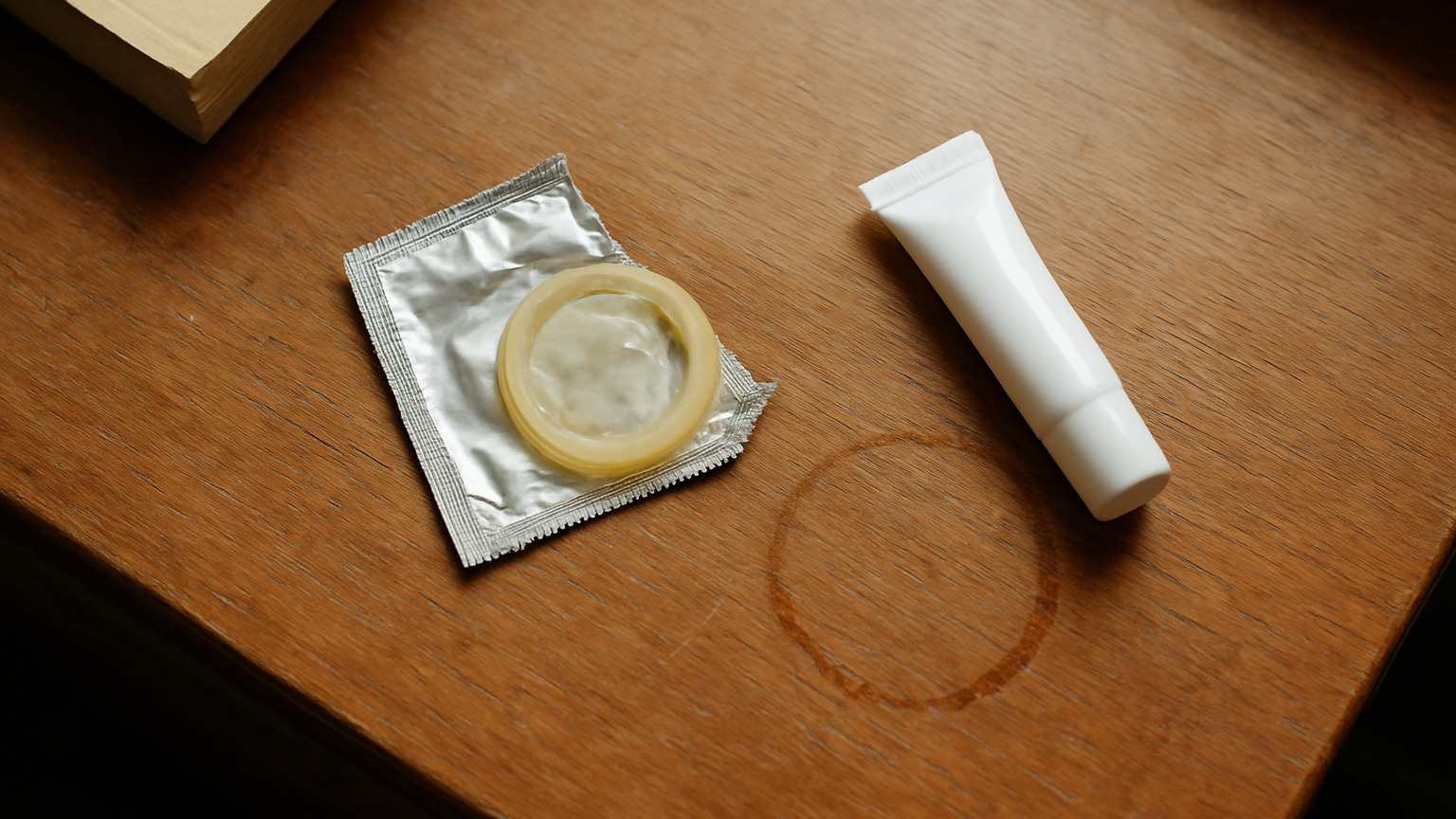
Latex allergy is uncommon but real, and it ranges from mild irritation to a serious reaction. Two synthetic alternatives protect against infection as well as latex does, and one traditional alternative does not protect at all, which is worth knowing before buying it.
Polyisoprene
Synthetic rubber without the proteins that cause latex allergy. It stretches and feels much like latex, which most people prefer, and it is the usual first recommendation. It is compatible with water-based and silicone lubricants and, like latex, is destroyed by oil-based products.
Polyurethane
Plastic rather than rubber. It is thinner, conducts heat well, and is compatible with every lubricant including oil-based ones, which is its main practical advantage. The trade-off is that it is less elastic than latex or polyisoprene, so fit matters more and slippage is somewhat more likely. It is also generally more expensive.
Nitrile
Used for gloves rather than condoms in most contexts, and the material of choice for fingering and fisting where latex allergy is a factor. Nitrile is compatible with all lubricants including oil-based, unlike latex gloves.
Why lambskin is not an option
Condoms made from lamb intestine are sold as natural alternatives and are effective for contraception, but the material is porous at a scale that allows viruses through. They do not protect against HIV, hepatitis or other infections and should not be used for that purpose. This is a genuine safety point rather than a preference, and the packaging does not always make it obvious.
How do you know if you are allergic?
Itching, burning, redness or a rash in the area of contact, appearing during or shortly after use, is the common presentation. More severe reactions involving swelling, hives, wheezing or difficulty breathing need urgent medical attention and mean latex should be avoided entirely, including in gloves and other medical equipment. Tell any clinician who is about to examine you.
Could it be something else?
Frequently. Irritation attributed to latex is often caused by something else in the product or alongside it: spermicide, particularly nonoxynol-9, which damages the rectal lining and should be avoided regardless. Flavourings, warming or tingling agents. Fragrances in lubricant. High-osmolality lubricants that draw water out of the mucosal surface. Trying a plain, unlubricated condom with a separate low-osmolality lubricant often resolves what looked like an allergy.
What about a partner's allergy?
The reaction can occur in either person, so if one of you develops symptoms the material needs changing for both. Latex proteins can also transfer on hands and toys, which is worth considering if reactions occur without direct condom contact.
Do they replace anything else?
No. Gloves reduce blood-borne transmission and injury; they do nothing about gonorrhoea or chlamydia acquired elsewhere in the same session, and they are not a substitute for screening or vaccination. Include hepatitis C in your regular screen if you fist, since that is the infection this article most concerns.
Where to get them
Sexual health clinics and free distribution schemes usually stock non-latex options, though not always on display, so ask. Pharmacies and supermarkets stock polyisoprene widely and polyurethane less consistently. Buying a small quantity of each to compare is worth doing before committing to a box.
What should you tell a clinician?
Mention a latex allergy at any sexual health appointment, since gloves and equipment used during examination are frequently latex. Services keep non-latex alternatives and will use them, but only if they know. If your reaction has ever involved swelling or breathing difficulty, say so explicitly, because that changes how seriously it is handled.
The short version
Polyisoprene if you want something that feels like latex. Polyurethane if you need oil compatibility or want something thinner. Nitrile for gloves. Never lambskin for infection prevention.
Do they cost more?
Generally yes, particularly polyurethane. Free supplies from sexual health clinics and local schemes usually include non-latex options, though not always on display, so asking removes the cost issue entirely. It is worth asking for a supply rather than a couple.
Are they as strong?
Polyisoprene performs comparably to latex in testing. Polyurethane is strong but less elastic, so it accommodates movement less readily and slippage is somewhat more likely with an imperfect fit. Both are approved for infection prevention, unlike lambskin.
What about gloves and dams?
Nitrile gloves are the latex-free option and are compatible with all lubricants. Non-latex dental dams exist but are harder to find, and a cut-open polyisoprene or polyurethane condom serves the same purpose.