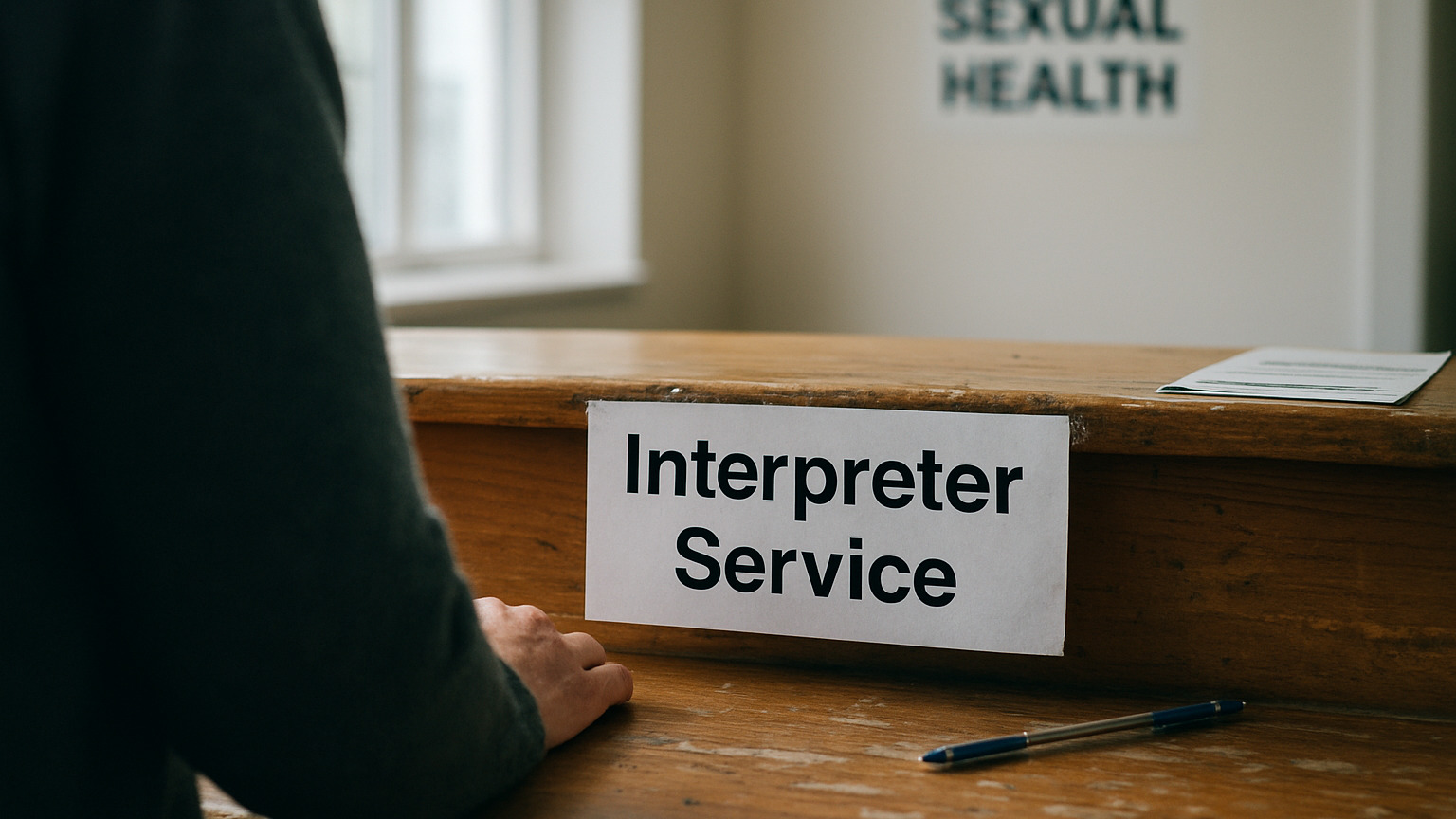
Interpreting and adjustments are both free and both work far better arranged in advance. Services are under a legal duty to make reasonable adjustments, and in practice the limiting factor is usually that nobody was told what was needed.
How do you get an interpreter?
Ask when you book, naming the language. Services use professional interpreting by phone, video or in person, free of charge. Telephone interpreting can usually be arranged on the spot, so it is still worth asking if you have turned up without notice.
Why not bring a family member?
Because accuracy matters and relatives edit. People routinely soften what a patient says or what a clinician has said, and in sexual health that changes which tests are done. It also removes any possibility of you speaking freely about a partner, which is occasionally the point.
What about British Sign Language?
BSL interpreting should be provided, and it generally needs booking further ahead than spoken-language interpreting because interpreters are scheduled. Ask as early as you can. Some services also offer video relay.
What counts as a reasonable adjustment?
A longer appointment. The first or last slot when the waiting room is quiet. A quieter place to wait. Written information rather than verbal. Somewhere private to give your details instead of at a desk. A specific clinician, or a male or female one. Step-free access and accessible examination facilities.
What about anxiety?
A legitimate reason to ask for adjustments rather than something to push through. Bringing someone, waiting elsewhere and being called, writing things down instead of saying them, and asking for a health adviser who has more time all help. Say it when booking rather than hoping it will be noticed.
What about learning disabilities or autism?
Adjustments should include clear explanation, extra time, avoiding unnecessary sensory demands and, where useful, easy-read materials. Services vary in how well they do this and asking specifically improves the odds considerably.
What about physical access?
Ask about step-free access, accessible toilets and height-adjustable couches before travelling, since older clinic buildings vary. Where a particular site cannot accommodate you, another site in the same service frequently can.
Is there a legal basis?
Yes. The Equality Act 2010 in England, Scotland and Wales requires reasonable adjustments for disabled people, with broadly similar duties in Northern Ireland under separate legislation. Being unable to access a service on equal terms is something to raise rather than accept.
What if the adjustment is refused?
Ask why, and ask for it in writing. Raise it with the service manager or the trust's Patient Advice and Liaison Service. The Equality Advisory and Support Service advises free of charge. Meanwhile, open access means another service can see you.
What if English is not your first language and you decline an interpreter?
Your choice, and worth weighing. Sexual health involves specific terms where approximate understanding produces the wrong tests, so an interpreter is more useful here than in many settings even for confident speakers.
Self-taken swabs, a smaller speculum where an examination is needed, correct name and pronouns, and a clinician familiar with trans patients. These are ordinary requests. Some services run trans-specific sessions, and cliniQ in London is trans-led.
What about transport and cost?
Some services and HIV charities can help with travel expenses for people on low incomes. It is rarely advertised, so asking a health adviser is the way to find out.
What helps most?
Saying what you need at the point of booking, in one sentence. Services can almost always accommodate something planned and frequently cannot accommodate the same thing at the reception desk.
What about phone and online access?
Online triage forms are difficult for some people and services should offer an alternative route. If a form is a barrier, ring and say so, or ask a support worker to help. Being unable to complete a form should not mean being unable to access the service.
Does asking affect how you are treated?
It should not, and in practice it usually improves things, because staff can plan. Adjustments requested in advance are almost always accommodated; the same request at the desk frequently cannot be.