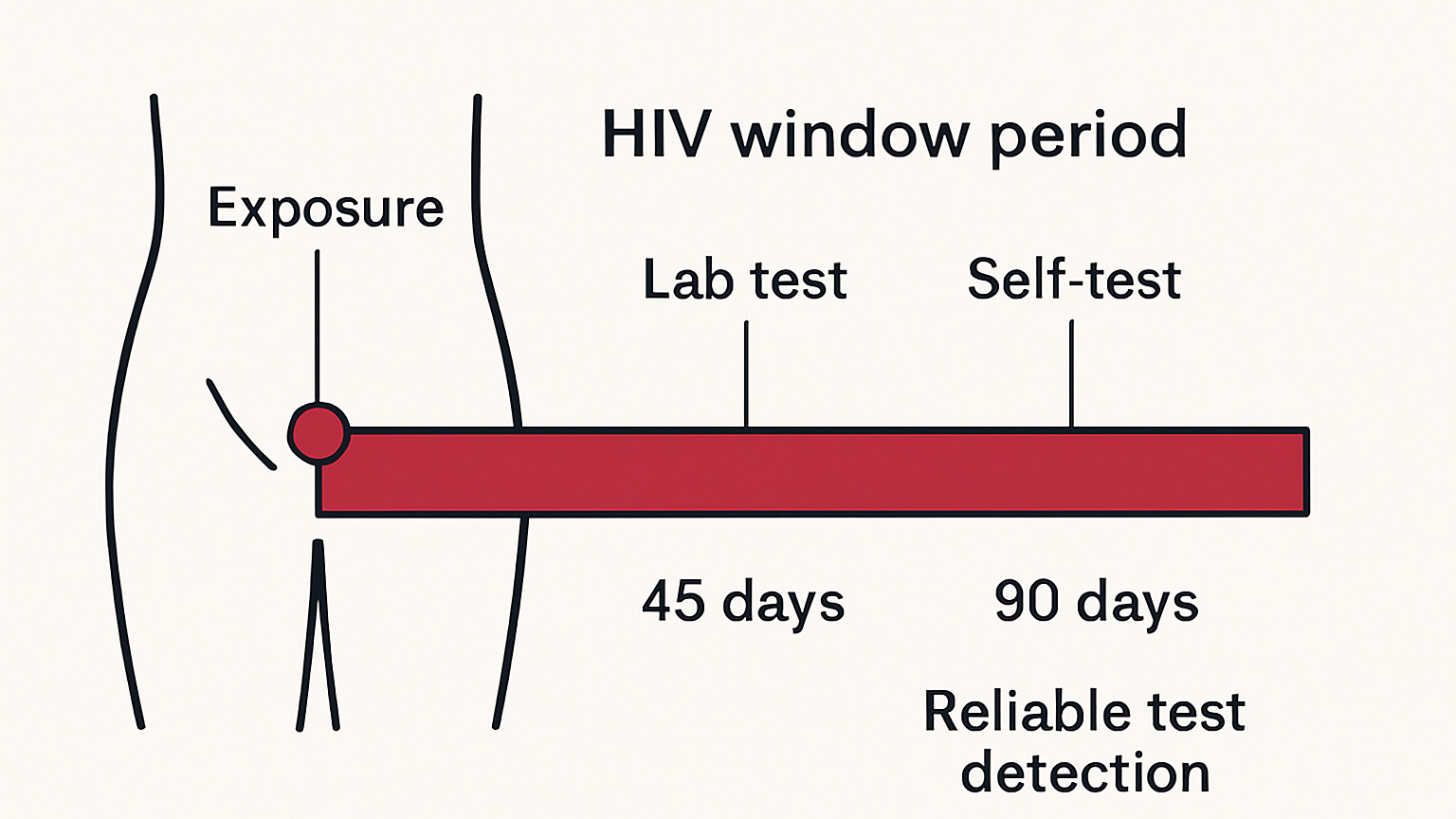
The HIV window period is the gap between acquiring the virus and a test being able to detect it. In the UK the answer depends entirely on which test you took. A fourth-generation laboratory test is regarded as conclusive at forty-five days. A rapid finger-prick test or a postal self-test is conclusive at ninety days. Both numbers are correct, and confusing them is the most common source of unnecessary anxiety.
Why do the two tests differ?
A fourth-generation test looks for two things: antibodies your immune system produces against HIV, and p24, a protein from the virus itself. The p24 antigen appears in the blood before antibodies do, typically from around two to three weeks, which pulls the reliable point forward considerably. Rapid and self-tests generally detect antibodies only, and antibodies take longer to reach detectable levels in everybody, with a small proportion of people taking up to three months.
What does forty-five days actually mean?
It means that a negative fourth-generation result forty-five days or more after the exposure you are worried about excludes HIV from that exposure. It does not need repeating. This is a change from older guidance that quoted twelve weeks for everything, and plenty of information online still reflects the older position, which is why people find contradictory answers.
Can a test detect it earlier than that?
Often, yes. Many infections are picked up by a fourth-generation test at three or four weeks, and the majority by six. The forty-five day figure is the point at which a negative result can be trusted in essentially everyone, not the point at which the test starts working. A negative test at three weeks is genuinely encouraging but not final, and should be repeated.
What about the RNA test?
An HIV RNA viral load test detects genetic material from the virus and can turn positive from roughly ten days. It is not part of routine screening because it is costly and can occasionally produce false positives at very low readings. Clinics use it when the clinical picture suggests very recent infection, for example someone with a clear high-risk exposure a fortnight ago who now has fever, rash and swollen glands.
Does PrEP or PEP change the window?
Yes, and this matters. Antiretroviral medication can suppress viral replication enough to delay both antigen and antibody appearance, so someone who acquires HIV despite taking PrEP, or during a PEP course, may seroconvert later than usual. UK guidance is to test at the end of a PEP course and again at least four to six weeks afterwards. If you are on PrEP, the three-monthly testing schedule built into your prescription is designed around this, and it is a reason to test through the clinic rather than relying on a home kit alone.
What if you test negative before the window closes?
Repeat it. This is the single most common failure in the whole process: someone tests at three weeks, gets a negative, feels relieved and never goes back. Put the repeat date in your phone at the time you take the first test.
Should you avoid sex during the window?
Avoiding condomless sex during that period is sensible, because if you have just acquired HIV the viral load during acute infection is extraordinarily high and this is when onward transmission is most likely. If you are on PrEP and taking it correctly, that is a different situation, since PrEP is protecting you rather than you waiting to find out.
Where to get tested
Sexual health clinics use fourth-generation laboratory testing as standard and are free to everyone regardless of GP registration or immigration status. Free postal HIV tests are available across England through national services, though check whether the kit you order is a laboratory blood sample, which follows the forty-five day rule, or a finger-prick antibody self-test, which follows the ninety day one. The difference determines when your result means something.