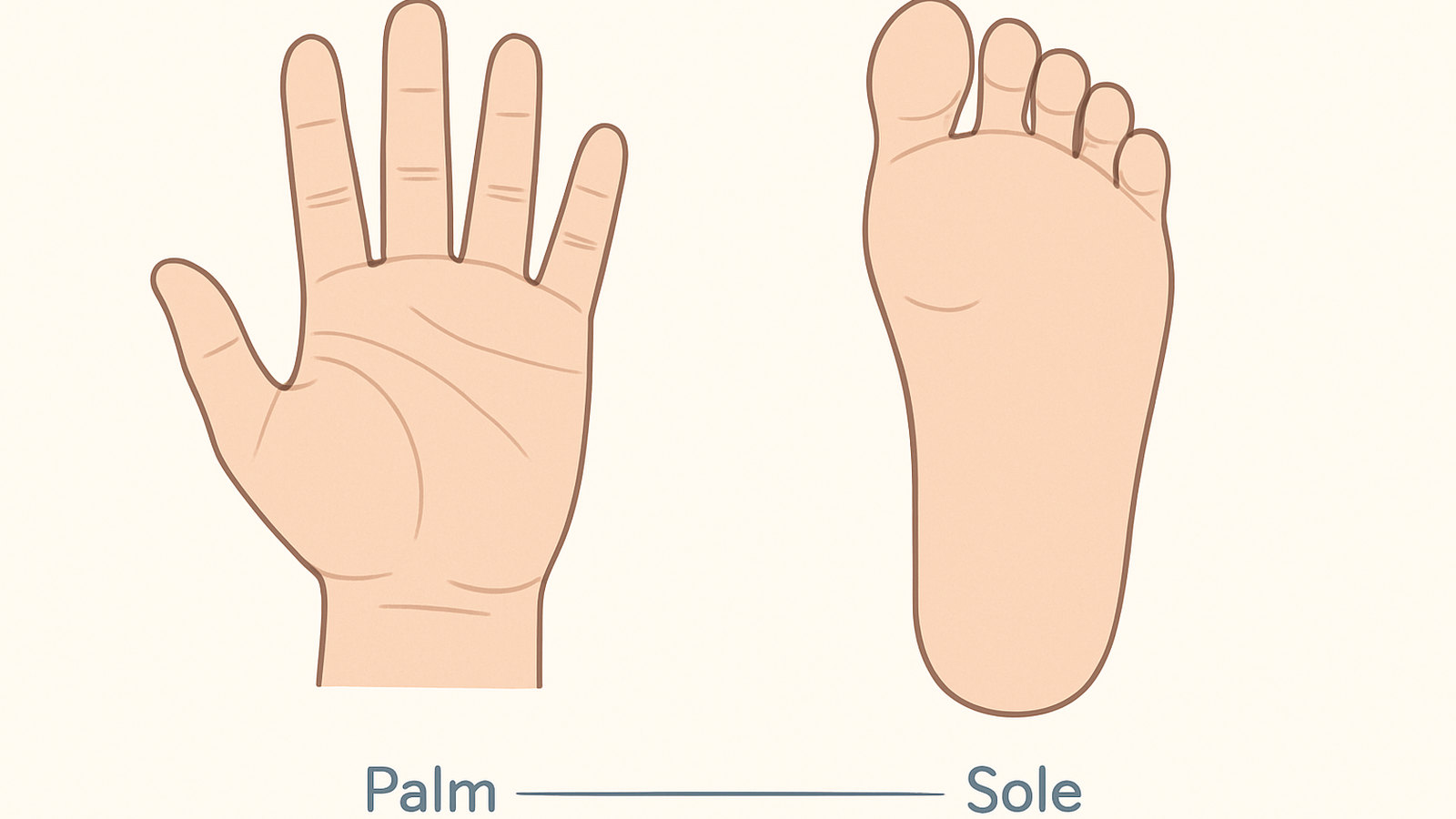
The rash of secondary syphilis is one of the more distinctive things in sexual health medicine and simultaneously one of the most frequently missed. It is typically flat rather than raised, coppery or dusky pink to brown in colour, spread across the trunk, and often present on the palms of the hands and the soles of the feet. Crucially, it usually does not itch, which is why people so often decide it cannot be anything serious.
What comes before the rash?
The rash is the second act. The first is a chancre, a single painless ulcer that appears where the bacterium entered, anywhere from nine to ninety days after exposure with three weeks being typical. It has a firm, clean base and a well-defined edge. Because it does not hurt and often sits inside the rectum, inside the mouth or under the foreskin, plenty of people never see theirs. It heals on its own after a few weeks whether or not you treat it, which is thoroughly misleading, since the infection carries on.
When does the rash appear?
Secondary syphilis usually develops four to ten weeks after the chancre, though it can overlap with a chancre that has not quite healed. It is a systemic stage, meaning the bacterium has spread through the bloodstream, and the rash is only part of it.
How do you tell it apart from other rashes?
Three features do most of the work. First, involvement of the palms and soles, which is unusual for the everyday rashes people get and should always raise the question. Second, the absence of itching, in contrast to eczema, an allergic reaction or a drug rash. Third, the colour, often described as coppery or ham coloured rather than bright red. None of these is definitive on its own, and syphilis has earned its reputation as the great imitator by presenting in almost every conceivable pattern, including as raised bumps, patches that look like psoriasis, or barely anything at all.
What else happens at this stage?
The rash frequently comes with a general flu-like feeling: mild fever, sore throat, headache, aching muscles, swollen lymph nodes in the neck, armpits and groin, and a level of fatigue people usually blame on work. Moist, greyish-white patches called mucous patches can appear in the mouth or on the genitals, and wart-like lesions known as condylomata lata can develop in warm, moist areas such as the groin or between the buttocks. Patchy hair loss occurs in some cases. All of it is highly infectious.
What happens if you ignore it?
The secondary stage resolves by itself within weeks to a few months, which again gives the impression of recovery. The infection then enters a latent phase where nothing is visible but the blood test remains positive. A proportion of untreated cases go on years or decades later to develop damage to the heart, brain, nerves or eyes. Syphilis can also affect the eyes and nervous system much earlier than the textbooks once suggested, so any new visual change, hearing loss or severe headache alongside these symptoms needs urgent assessment rather than a routine appointment.
How is it diagnosed?
A blood test is the mainstay, and it is part of every standard sexual health screen in the UK. If an ulcer is present, a swab of the lesion can confirm it directly. Because antibodies take time to develop, a blood test is considered conclusive twelve weeks after the exposure you are concerned about. If you have a rash or ulcer now, get seen now rather than waiting for that window to close.
How is it treated?
An injection of long-acting penicillin, usually a single dose for early infection and three weekly doses for later stages. It is highly effective, and alternatives exist if you are allergic. Treatment stops the infection progressing but cannot reverse damage already done, which is the whole argument for catching it in the first two stages.
What to do next
If you have a flat non-itchy rash involving your palms or soles, or you remember a painless sore that healed by itself, book a sexual health clinic appointment and mention both. Syphilis rates in the UK have risen substantially and it is now one of the infections regular screening is most worth doing.