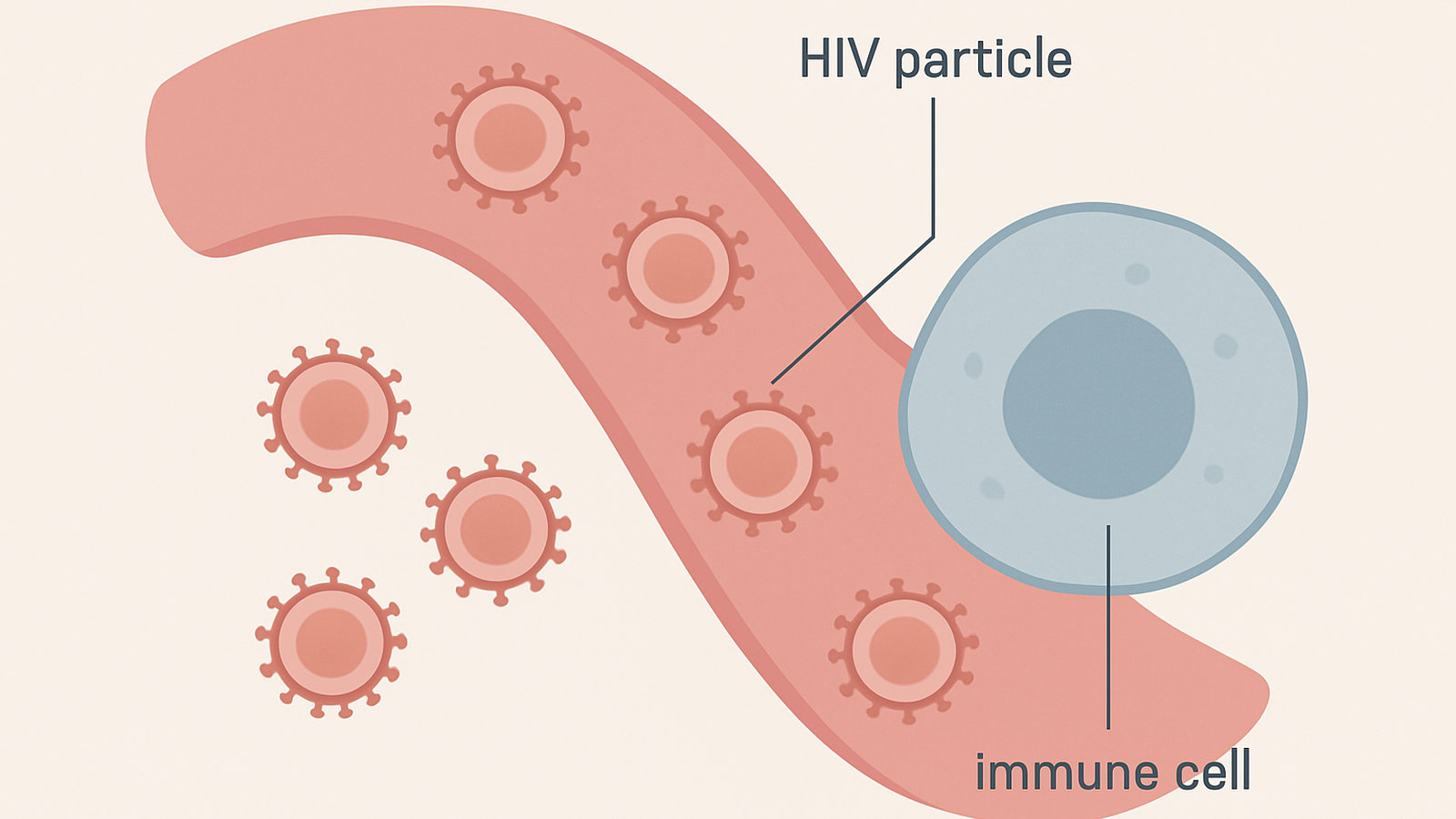
Acute HIV infection, often called seroconversion illness, occurs in somewhere between half and eighty per cent of people within one to four weeks of acquiring the virus, most commonly around two to three weeks. It is the body mounting a response as the virus replicates rapidly, and it looks almost exactly like a bad flu or glandular fever. Almost nobody recognises it for what it is at the time.
What are the symptoms?
Fever is the most consistent feature, often with drenching night sweats. A sore throat, sometimes severe, is very common. Swollen lymph nodes in the neck, armpits and groin are typical. A rash appears in many cases: usually flat or slightly raised small red or pink spots across the trunk, upper chest and back, occasionally reaching the face, palms and soles, and it is not usually itchy. Muscle and joint aches, headache, profound fatigue, mouth ulcers and loss of appetite fill out the picture. Some people get diarrhoea, and a smaller number get more unusual features such as severe headache with neck stiffness.
How long does it last?
Typically one to two weeks, occasionally longer. It resolves on its own, which is exactly why it so often gets filed away as a virus that went round the office. After it settles, HIV usually causes nothing at all for a period of years.
What distinguishes it from ordinary flu?
Nothing reliably, and this is the honest answer. The combination of fever, sore throat, a non-itchy rash on the trunk and widespread swollen glands is more suggestive than fever alone, and the absence of a runny nose or cough leans away from a respiratory virus. Glandular fever produces a nearly identical picture. What actually distinguishes it is the history: a specific condomless exposure two to four weeks earlier with a partner of unknown or positive status not on treatment. If that history exists, the illness in front of you should be tested for rather than reasoned about.
Why does it matter so much?
Because viral load during acute infection is extraordinarily high, often millions of copies per millilitre, which makes this the period of greatest infectiousness in the whole course of untreated HIV. A significant proportion of onward transmissions happen from people in this window who have no idea they are positive. Getting diagnosed here rather than months later prevents transmissions and gets treatment started at the point where it does the most good for your own immune system.
Which test detects it?
This is important, because standard antibody tests may still be negative during acute infection. A fourth-generation laboratory test detects both antibodies and p24 antigen, and the antigen appears earlier, so it can pick up infection from around two to three weeks. If clinicians suspect very recent infection they can also order an HIV RNA viral load test, which detects the virus itself within roughly ten days. Rapid finger-prick tests and home self-tests are antibody-only and will frequently miss acute infection entirely.
What should you tell the clinic?
Be direct. Say that you had condomless sex on a specific date, that you now have these symptoms, and that you are concerned about seroconversion. That prompts the right test rather than a routine antibody screen with a follow-up in six weeks. If you were not on PrEP and the exposure was within seventy-two hours, the conversation is different again and PEP becomes the priority, but seroconversion symptoms mean that window has already closed.
What if the test is negative?
A negative fourth-generation test is not conclusive until forty-five days after the exposure, so you will be asked to repeat it. Do repeat it. In the meantime, avoid condomless sex, because if you are in the acute phase you are highly infectious even if the test has not caught up yet.
If it is positive
Treatment starts quickly, usually within days, and modern regimens are commonly one tablet a day. Most people reach an undetectable viral load within one to six months, at which point HIV cannot be passed on sexually and life expectancy is close to normal. Being diagnosed at the acute stage is, in every clinical sense, the best time to find out.