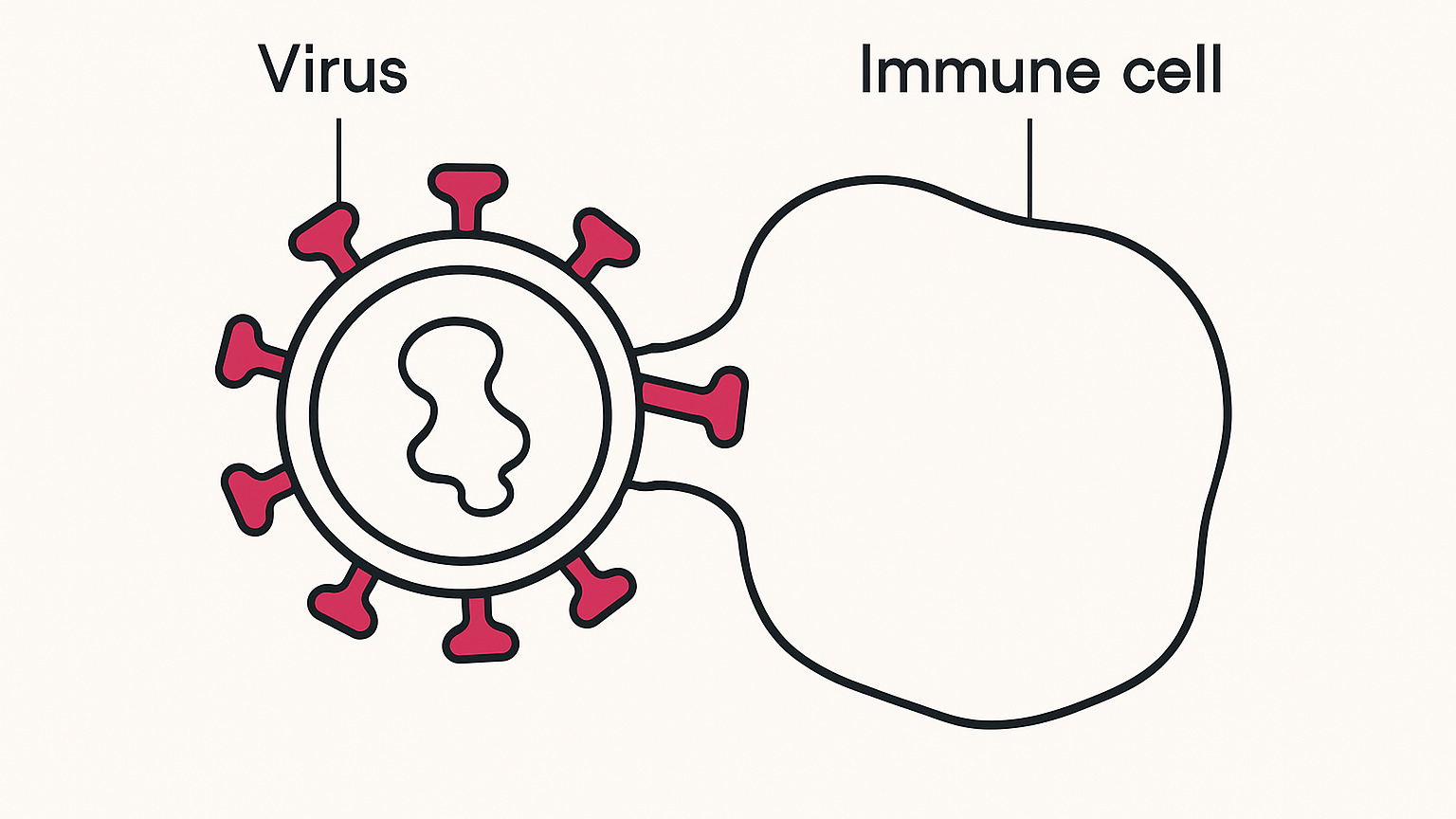
Undetectable equals untransmittable means that a person living with HIV who is on effective treatment with a sustained undetectable viral load cannot pass the virus on through sex. This is not a statement about low risk or acceptable risk. It is a statement that the risk is zero, and it rests on some of the most robust evidence in sexual health.
What is the evidence?
Several large studies followed thousands of couples where one partner was living with HIV and virally suppressed and the other was not, over years of condomless sex. Across tens of thousands of sexual acts, including anal sex between men, there were no transmissions from a partner with a sustained undetectable viral load. Where transmissions occurred in these cohorts, genetic testing showed they came from outside partners rather than from the suppressed partner. That consistency across separate studies is why the conclusion is stated without hedging.
What counts as undetectable?
Most UK laboratories report undetectable below fifty copies per millilitre. The evidence base for untransmittability uses a threshold of two hundred, which gives a margin for the small fluctuations that occur. Sustained is the key word: this means suppression maintained over at least six months on consistent treatment, not a single good result.
What about blips?
Occasional small rises, often to a few hundred copies, happen and are usually caused by a recent infection, a vaccination or laboratory variation. A single blip in someone otherwise consistently suppressed does not change the position. What does matter is a sustained rise, which needs discussing with your clinic and usually means adherence or resistance requires attention.
What does it not cover?
Only HIV, and only sexual transmission. Undetectable status has no effect on gonorrhoea, chlamydia, syphilis, hepatitis, mpox or anything else, so regular screening remains as necessary as it was. It also does not apply to shared injecting equipment, where the evidence is not established in the same way, or to breastfeeding, where the risk is very low but not proven to be zero.
Why does this matter beyond the clinical facts?
Because it changes the meaning of a diagnosis. Someone on effective treatment is not a risk to their partners, cannot pass HIV to a child conceived through ordinary sex, and does not need to organise their sex life around a danger that no longer exists. A great deal of stigma, including stigma people direct at themselves, is built on a picture of transmission that stopped being accurate years ago.
How do you know you are suppressed?
Viral load is measured routinely, usually every three to six months once you are stable. Ask for your numbers rather than accepting that everything is fine, and keep a note of them. Knowing your own results makes conversations with partners considerably easier.
How do you explain it to a partner?
Plainly, and with somewhere to send them. Many people have not heard it, or have heard it and not believed it, and the reaction is often about what they absorbed years ago rather than about you. Pointing them to a clinical source such as the British HIV Association or an established charity does more than arguing. A partner who wants to take PrEP anyway is entitled to, and that decision is theirs rather than a comment on your treatment.
The practical summary
Take the medication, attend the monitoring, know your viral load. Sustained suppression protects your own health and removes sexual transmission entirely, which are two separate benefits achieved by the same tablet.
Does it apply to all types of sex?
Yes. The studies included anal sex between men specifically, across tens of thousands of acts, which matters because that was the scenario people most doubted. There is no act for which suppression works less well, because the mechanism is the absence of virus rather than a physical barrier.
What if a partner asks for proof?
Some people show a recent viral load result, and clinics will print one on request. Whether you want to do that is entirely your decision, and there is no obligation to prove anything about your own body. A partner who cannot accept the position without documentation may be someone worth sending to a clinician rather than trying to persuade yourself.
Why does the wording matter?
Because hedged language reintroduces doubt the evidence does not support. Saying the risk is very low invites people to imagine a residual danger. The accurate statement is that sustained suppression means HIV is not passed on through sex.