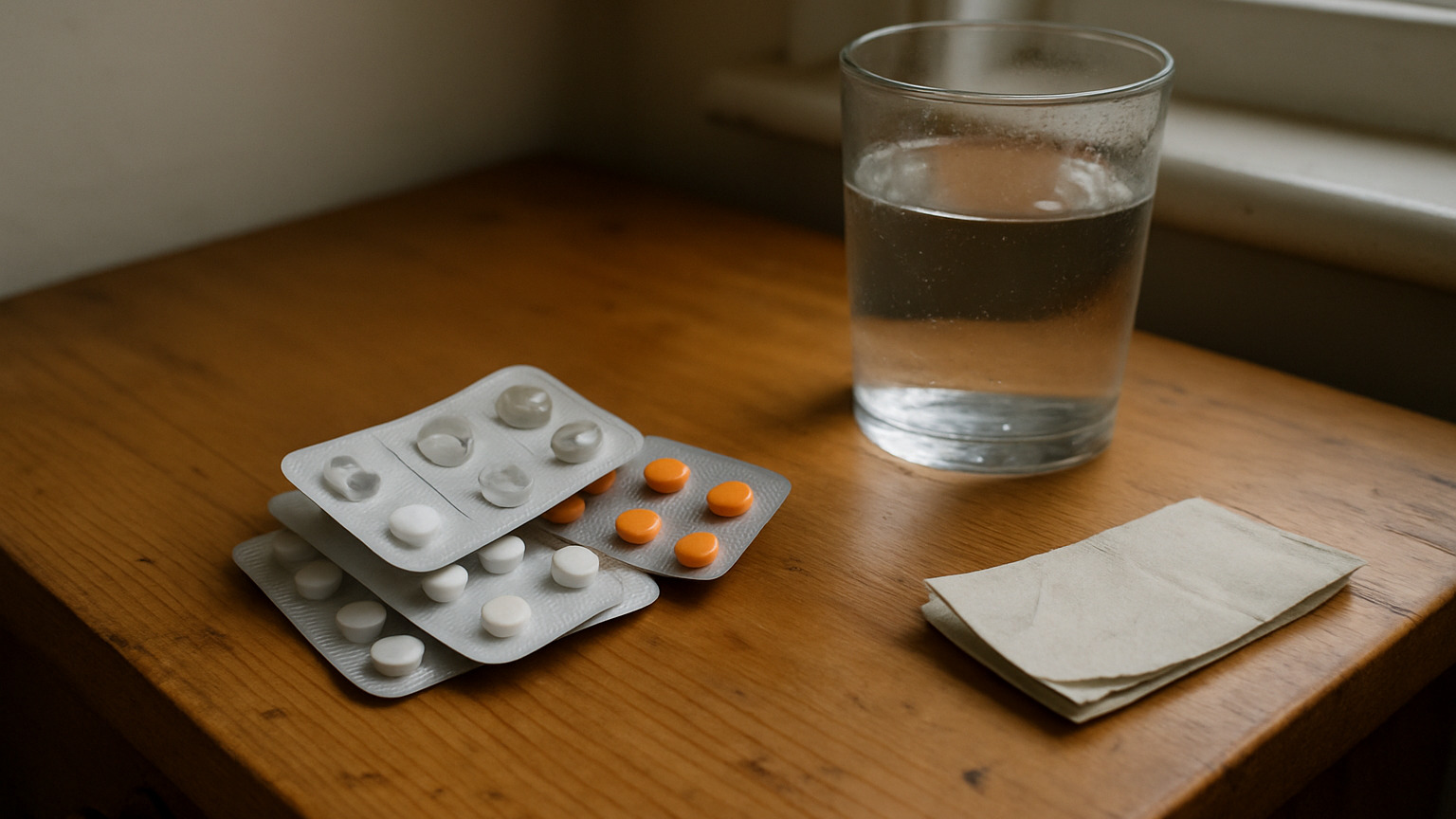
Darunavir has two requirements that determine whether it works: it must be taken with food, and it must be taken with its booster. Neither is optional.
Why does food matter?
Because absorption is substantially better with food. Taken on an empty stomach, levels are meaningfully lower, which erodes the resistance barrier that is the drug's main advantage. A meal or a substantial snack is enough.
What counts as enough food?
More than a biscuit and less than a banquet. A proper snack or a meal will do. Unlike rilpivirine, there is no specific calorie target, and the practical rule is simply not to take it on an empty stomach.
Why must the booster be taken with it?
Because without it darunavir is cleared too quickly and levels fall below what is needed. Taking them at different times, or taking one and not the other, produces unpredictable levels. Treat them as a single dose.
What time of day?
Whichever meal suits you, at roughly the same time each day. Many people take it with their largest meal, which is also the easiest to remember. Twice-daily dosing means morning and evening meals.
How long does it take to work?
Viral load begins falling within days and suppression usually takes between one and six months. Boosted protease inhibitors tend to suppress slightly more slowly than integrase inhibitors, which is a difference in speed rather than in eventual outcome.
What if you miss a dose?
Take it with food as soon as you remember unless it is nearly time for the next, in which case skip it rather than doubling up. Darunavir tolerates an occasional miss better than most antiretrovirals because of its resistance barrier, which is a margin rather than a licence.
Does that mean adherence matters less?
It means the consequences of a lapse are less severe, not that lapses are fine. Suppression still depends on taking it, and a pattern of missed doses will eventually cause failure even with a high barrier.
What if you cannot eat?
Take it with whatever you can manage rather than skipping it. Something is considerably better than nothing, and the pattern to avoid is repeated doses on an empty stomach rather than a single occasion.
What if you vomit after taking it?
If within an hour, take another dose with food. Beyond that it has generally been absorbed. Recurrent vomiting warrants a call rather than repeated guessing.
Can you stop it?
Not independently. Stopping allows the virus to rebound within weeks and restores transmission risk. Where a change is needed it is made by switching. If you want to stop for any reason, say so and an alternative will be found.
What about travel?
Take it at the same clock time in the new zone, with food, accepting one short or long interval. Carry it in hand luggage with the packaging and a margin beyond the trip length.
What if you keep forgetting?
Say so rather than treating it as a failing. Attaching it to a specific meal, setting an alarm and keeping spares in a bag all help, and single-tablet products reduce the number of things to remember.
What if your routine changes?
New job, shift work, a new relationship or moving house all disrupt medication habits, and this is when gaps appear. If your circumstances are about to change, it is worth thinking in advance about where darunavir fits into the new routine.
Does it matter if you are unwell?
Keep taking it through ordinary illness unless told otherwise, since interrupting treatment is worse than most short-term infections. If you cannot keep darunavir down for more than a day, contact the clinic rather than simply stopping.
What if you are in hospital?
Tell the ward you take darunavir and ask that it continues. Hospital pharmacies do not always stock every antiretroviral, and gaps during admission are a recognised problem. Bringing your own supply in is frequently the simplest solution.