
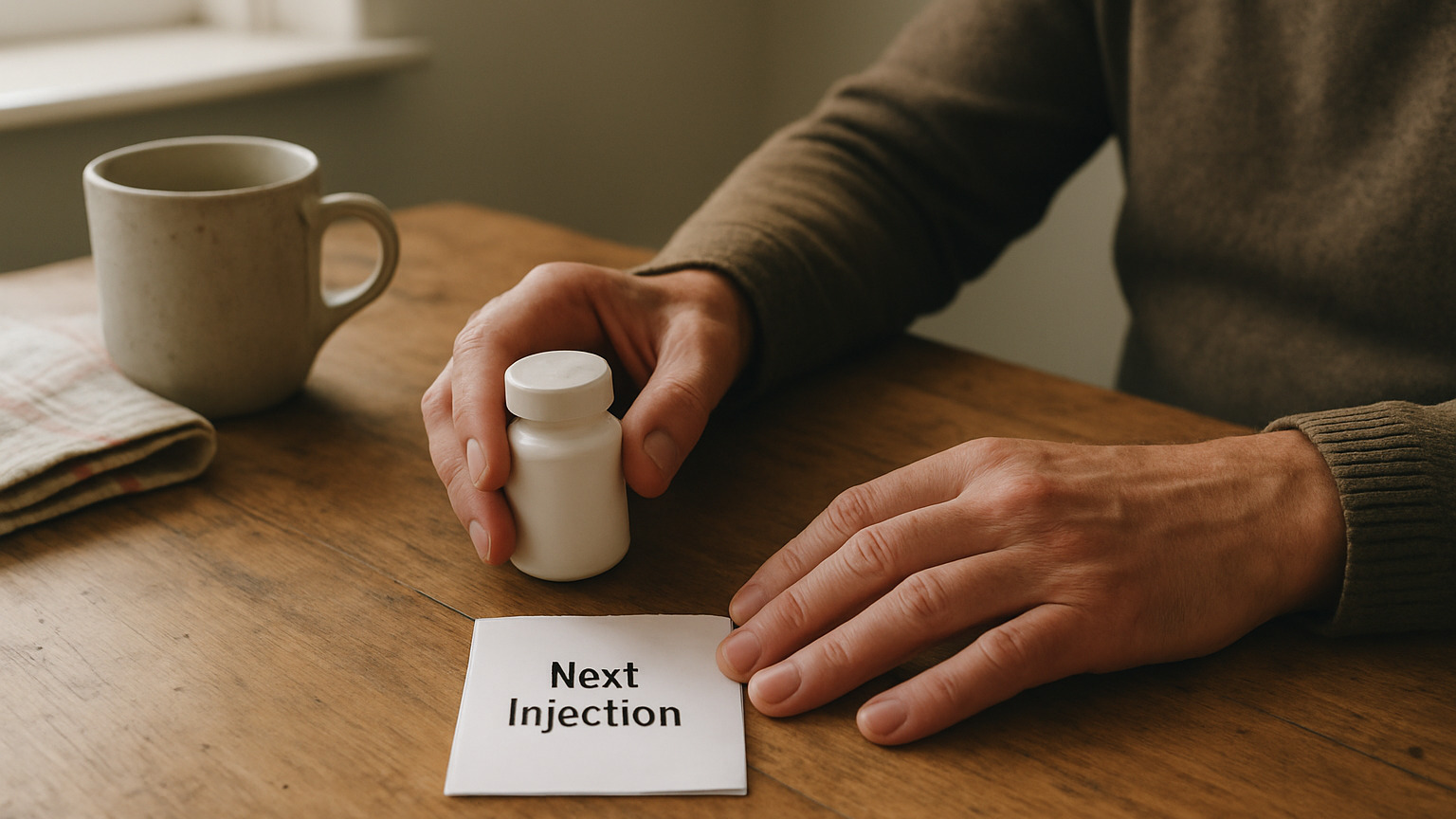
Cabotegravir removes daily dosing and replaces it with appointment discipline. For a great many people that is a straightforwardly better arrangement, and it does demand something different.
How is it given?
By a healthcare professional, as an intramuscular injection into the gluteal muscle. It takes a few minutes. For treatment you receive two injections at the same visit, cabotegravir and rilpivirine, into opposite sides.
What happens before each injection?
An HIV test, without exception. This is not a formality: giving cabotegravir alone to someone who has recently acquired HIV amounts to treating an infection with a single drug, which is precisely how integrase resistance develops. Expect it every time.
How long does it take to work?
Levels rise over the days following the first injection. Where an oral lead-in is used, that period is already covered. Your clinic will tell you when you are protected and whether anything else is needed in the interim, and it is worth asking rather than assuming.
What is the schedule?
An initial injection, a second one month later, then one every two months. Six appointments a year once established. Some treatment regimens use monthly injections instead.
How strict is the timing?
There is a window of around a week either side of the due date. Within that, fine. Outside it, contact the clinic rather than improvising, because levels fall and the protection or suppression falls with them.
What if you are going to miss one?
Tell the clinic in advance. Oral cabotegravir can bridge a planned gap, such as extended travel, and arranging that beforehand is straightforward. Discovering the problem afterwards is considerably more complicated.
What if you have already missed one?
Contact the clinic promptly rather than waiting for the next scheduled date. Depending on how long it has been, they may proceed as normal, bridge with tablets, or restart the initiation schedule. For prevention, assume you may not be protected until told otherwise.
What does the injection feel like?
Uncomfortable rather than painful for most people, with soreness at the site for a few days afterwards and sometimes a firm lump. Reactions tend to lessen with successive injections. Walking around afterwards helps, and most people go straight back to their day.
How do you stop it?
Deliberately, with a plan. Cabotegravir levels decline slowly over many months after the last injection, passing through a period where drug is present but not protective. Switching to oral PrEP or another method to cover that tail is essential rather than optional.
Why does the tail matter so much?
Because acquiring HIV while sub-protective levels remain exposes the virus to a single drug, which risks resistance to the whole integrase class. That class is the mainstay of modern treatment, so protecting it matters beyond your own regimen.
What else comes with it?
The usual three-monthly screening for other infections, which the injection does nothing to prevent, plus periodic bloods. The frequency of appointments makes this easier to keep on top of than it is for many people on tablets.
Can you go back to tablets?
Yes, and it is a planned switch rather than simply stopping. Because levels decline slowly, oral cover is started before the injected drug falls below useful levels. Your clinic will set the timing.
What should you do before a long trip?
Raise it at the appointment before. Injections can sometimes be brought forward, or oral cabotegravir can bridge a planned gap. Arranging this in advance is straightforward; discovering the problem while abroad is not.
What if you keep forgetting?
Say so rather than treating it as a personal failing. Missed doses are the commonest cause of treatment and prevention failing, and clinics deal with this constantly. Alarms, blister organisers, spare supplies in a bag, linking it to an existing habit and long-acting alternatives are all on the table.
Does it interact with your routine rather than your medicines?
Frequently the real issue. Shift work, irregular sleep, travel and living with people you are not out to all make daily dosing harder in ways that have nothing to do with willpower. Naming the actual obstacle usually produces a practical fix.


