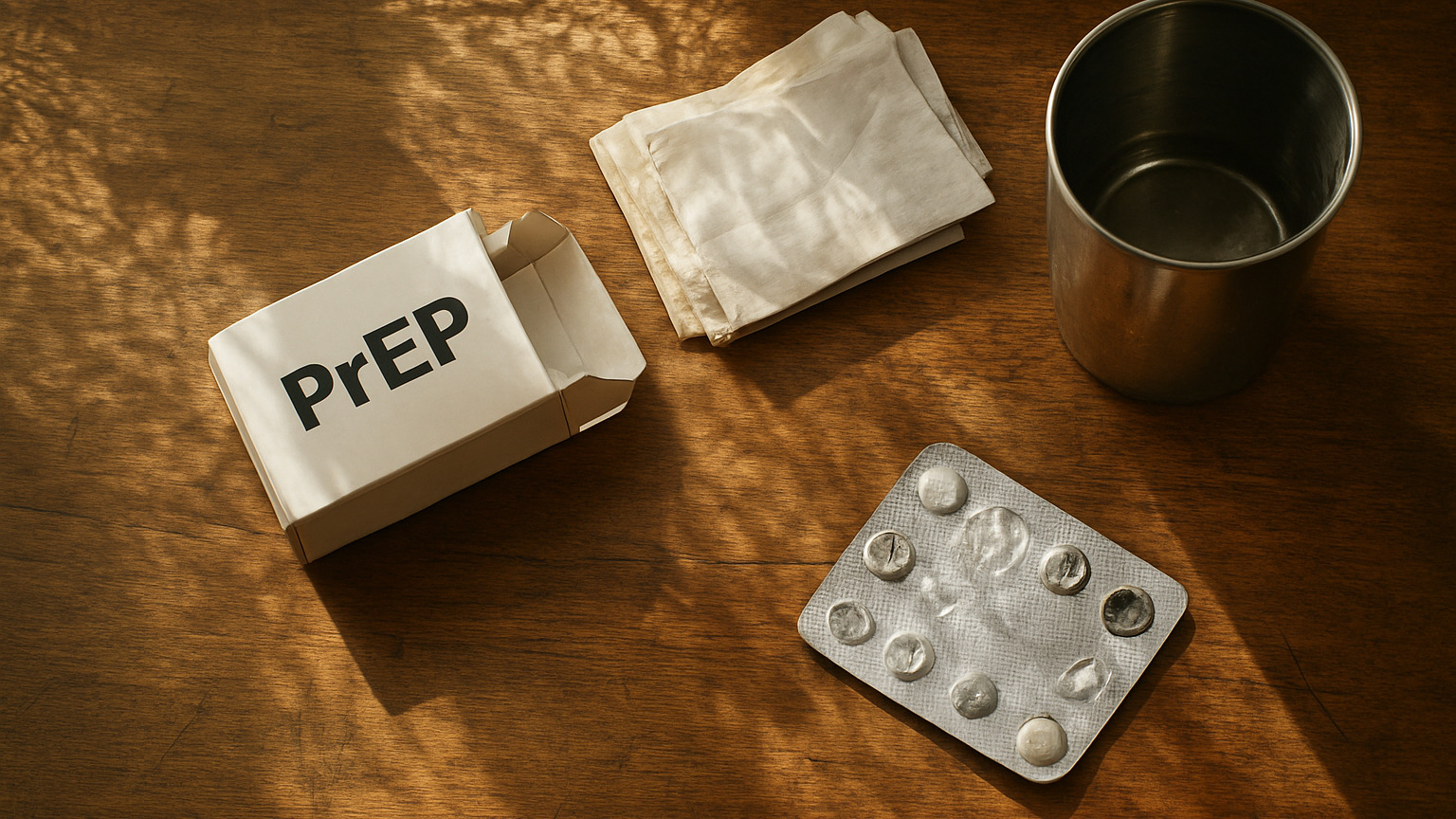
PEP has a reputation for being difficult that belongs to the regimens used a decade or more ago, which frequently combined a boosted protease inhibitor with older drugs and caused nausea severe enough that many people abandoned the course. Current UK regimens are considerably better tolerated, and most people complete the twenty-eight days without major difficulty.
What is commonly experienced?
Nausea is the most frequent, usually mild and worst in the first week. Tiredness, headache, loose stools, bloating and reduced appetite are all common. Some people report vivid dreams or disturbed sleep, particularly on regimens containing an integrase inhibitor. Most of this settles or becomes manageable within the first week or two, though it may not disappear entirely for the month.
What helps?
Taking the tablets with food makes a substantial difference to nausea. Taking them at a consistent time helps you remember and lets your body adjust. If sleep is disrupted, ask whether a morning dose would suit better. Eating small amounts more often, staying hydrated and avoiding a lot of alcohol during the course all help more than people expect. Anti-sickness medication can be prescribed if nausea is genuinely obstructive, and it is worth asking rather than enduring it.
What should be reported straight away?
Any rash, since a small number of antiretrovirals can cause hypersensitivity reactions. Yellowing of the eyes or skin. Severe abdominal pain. Muscle pain with dark urine. A marked reduction in how much you are urinating. Significant mood change. These are uncommon but should not be waited out.
What if you cannot tolerate it?
Contact the clinic rather than stopping. Regimens can usually be changed, and there are several combinations available. Stopping halfway through undoes most of the benefit, and it is a considerably worse outcome than a phone call. Clinics would rather switch you to something else on day six than discover on day twenty-eight that you took nothing after the first week.
Does the emotional side count?
It should. A month of daily tablets taken because of something that frightened you is not neutral, and many people find the course itself keeps the exposure present in a way that is hard. Anxiety, poor sleep and low mood during a PEP course are common and are worth mentioning at the follow-up appointment rather than treating as separate from the medical part.
What about interactions?
Tell the clinic everything you take, including over-the-counter medicines, supplements and recreational drugs. Antacids and supplements containing calcium, magnesium, iron or zinc reduce absorption of integrase inhibitors and need separating by several hours, which is an easy thing to get wrong and a genuine cause of reduced drug levels.
What if you vomit after a dose?
If it is within an hour of taking it, take another dose. Beyond a couple of hours it has generally been absorbed. If vomiting is persistent over a day or more, contact the clinic, since absorption across several doses may be affected and that matters more here than it would with a routine medication.
How long until you feel normal?
Most side effects resolve within days of finishing the course. If something persists beyond that, it is worth investigating rather than attributing to the medication after the fact.