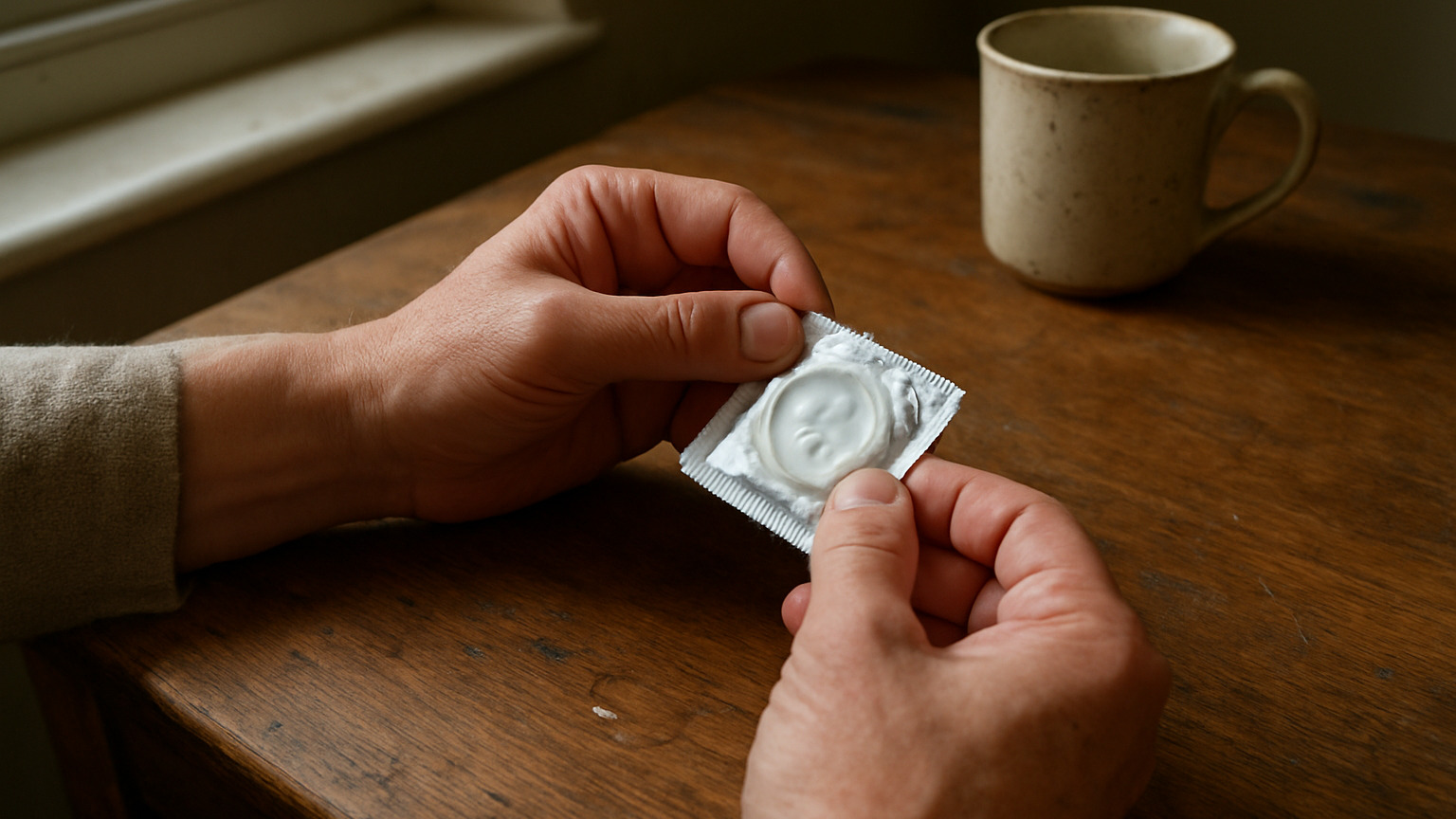
Condom breakage during anal sex is uncommon but not rare, with studies reporting rates of a few per cent. Almost all of it comes down to a short list of causes, and every one of them is avoidable once you know what it is.
Not enough lubricant
The leading cause by a wide margin. The rectum produces no lubrication of its own, so friction builds against the latex until it fails. The fix is more lubricant than feels necessary, applied both outside the condom and at the entrance, and reapplied during rather than only at the start. A drop inside the tip before rolling it on improves sensation and reduces friction against the head.
The wrong lubricant
Oil-based products destroy latex within minutes. Coconut oil, petroleum jelly, massage oil, body lotion, moisturiser and butter all count. Polyisoprene condoms are affected the same way. Only polyurethane condoms tolerate oil. Water-based and silicone lubricants are safe with every condom material and are what should be within reach.
The wrong size
A condom that is too tight is under tension before anything happens and is more likely to split. One that is too loose slips off, which is a different failure with the same consequence. Nominal width matters more than length, and it is worth trying a few widths rather than assuming the standard size is correct because it is standard.
Air in the tip
Air trapped at the end has nowhere to go and concentrates pressure there. Pinch the tip while rolling it down so the reservoir stays empty. This is the most commonly ignored piece of advice and it genuinely matters.
Double bagging
Wearing two condoms increases friction between them and makes breakage more likely rather than less. The same applies to a condom worn over a condom on a toy. One condom, correctly sized, with enough lubricant.
Damage before use
Opening the packet with teeth, keys or scissors nicks the latex. Tear it carefully at the serrated edge after pushing the condom to one side. A condom carried loose in a wallet for months is subjected to heat and friction and should be replaced. Check the expiry date, since latex degrades and expired condoms break more readily.
Length of session and reuse
Prolonged sex increases cumulative friction, so reapplying lubricant and changing the condom during a long session both help. Never reuse a condom or turn one inside out, and change to a fresh one when moving between partners or between orifices.
Fingernails and jewellery
A nail edge or a ring can catch the latex when putting it on or during sex. Cut nails short, file them smooth, and take rings off if they have any edge to them.
What if it breaks anyway?
Stop. If HIV exposure is possible and you are not covered by PrEP, go to a sexual health clinic or A&E and ask about PEP, which has a seventy-two hour limit and works best within twenty-four. Do not douche, which damages the rectal lining. Test for bacterial infections at two weeks.
Does the receptive partner have a role?
Yes, and it is often overlooked. Being relaxed reduces resistance and therefore friction, and saying when something feels dry rather than waiting is the most useful contribution anyone can make. Position matters too: arrangements where the receptive partner controls depth and pace tend to produce less abrupt movement.
The habits that prevent most failures
Keep plenty of water-based or silicone lubricant within reach rather than in another room. Buy the width that fits. Pinch the tip. Open the packet carefully. Reapply during. That covers nearly everything.
How often does it actually happen?
Studies of anal sex report breakage in a small percentage of acts, with rates falling sharply when adequate lubricant is used. Most people who use condoms regularly experience it occasionally rather than never, which is worth knowing so that one failure does not read as evidence the method does not work.
Does technique during sex matter?
Yes. Very fast or forceful movement generates more friction and heat than a steadier pace, and long uninterrupted sessions accumulate stress on the material. Pausing to reapply lubricant is not an interruption of the process; it is part of it.