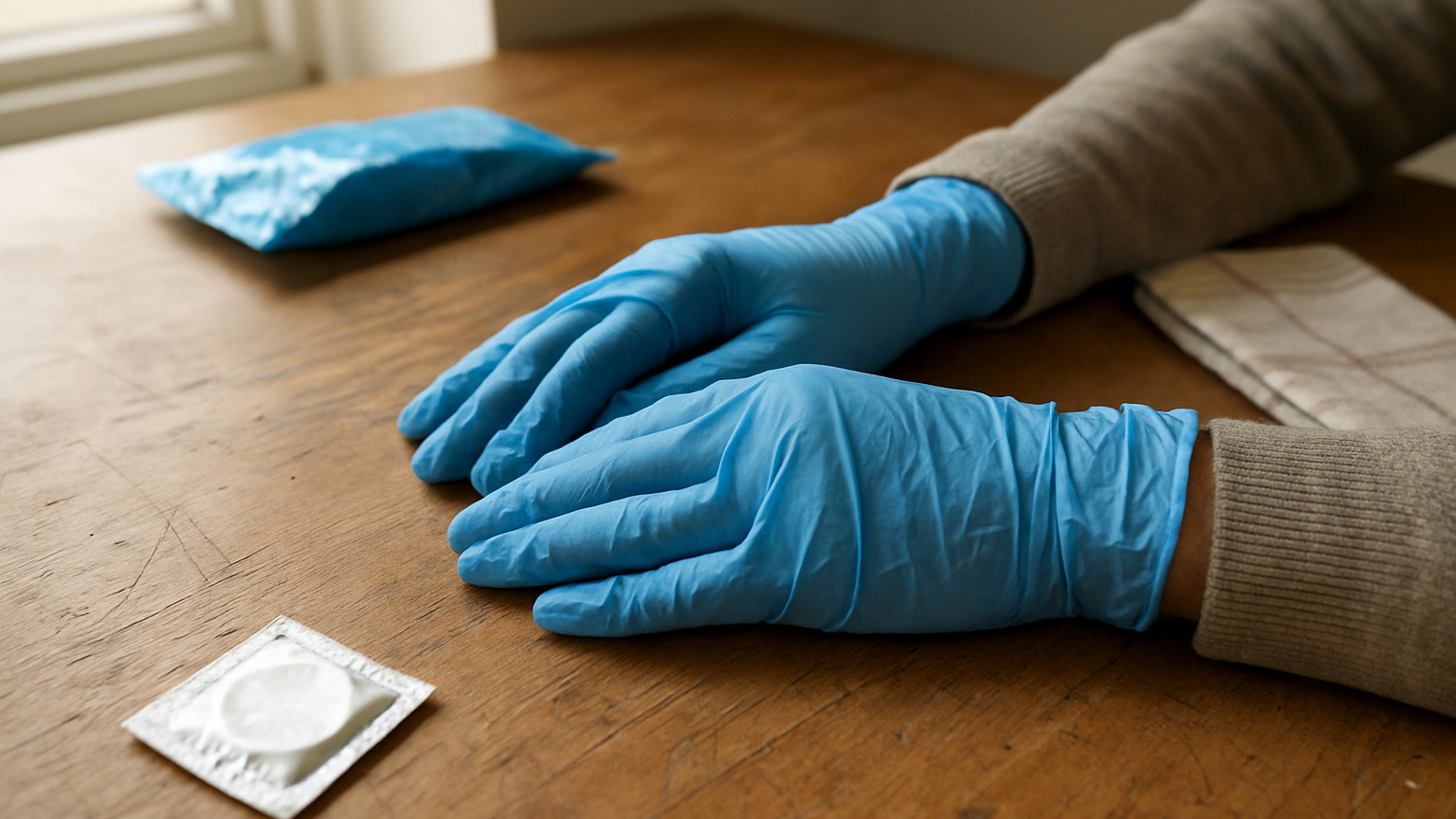
Gloves are among the more useful and least used barriers. They reduce transmission of blood-borne infections, protect the receptive partner from nail and skin injuries, protect your own hands from cuts, and make a session considerably easier to manage in practical terms.
Why does hepatitis C come up here?
Because it is transmitted through blood, and fingering and fisting frequently cause microscopic bleeding that neither partner notices. Hepatitis C has spread through sexual networks where fisting is common, and the routes are exactly the ones gloves interrupt: blood on hands moving between partners, and small cuts on the hands of the person doing it. It is now curable with a course of tablets, so finding it matters, but preventing it is better.
What material should you use?
Nitrile is the usual choice. It is strong, it does not cause latex allergy reactions, and it is compatible with every lubricant including oil-based ones. Latex gloves are cheaper but are destroyed by oil-based lubricant and are unsuitable if either person has a latex allergy. Vinyl gloves are the weakest and tear more readily, so they are a poor choice for anything sustained.
How do they help the receptive partner?
By presenting a smooth surface. A nail edge is the most likely thing to cause a tear in the rectal lining, and even short nails have edges. Gloves cover them, along with any rough skin, hangnails or jewellery. Cutting nails short and filing them smooth is still worth doing underneath, since a nail can push through a glove under pressure.
When should you change them?
Between partners, always. Between orifices. If they tear. And if you have been handling anything you would not want to introduce. Changing gloves is faster and more reliable than washing hands mid-session, which is part of why they make things easier rather than harder.
What about shared lubricant?
A communal tub that several gloved hands dip into is a well-recognised route for moving blood between people. Use individual containers, decant into separate pots, or use pump dispensers rather than open tubs. This is one of the more specific and actionable pieces of harm reduction for group settings.
Do they reduce sensation?
Some, though less than people expect, and a generous amount of lubricant over the glove restores much of it. Thinner nitrile gloves are available and are worth seeking out if this is the obstacle. Many people find the trade acceptable once they have tried it properly rather than dismissing it in advance.
What else matters for fisting?
A great deal of lubricant, reapplied often, and a thick one. Never anything containing a numbing agent, since pain is the signal that stops you causing damage. The same applies to drugs that blunt sensation, which is why serious injuries cluster in sessions where GHB, ketamine or heavy drinking were involved.
What are the warning signs afterwards?
Severe or worsening abdominal pain, a rigid abdomen, fever, vomiting, heavy bleeding or an inability to pass wind mean A&E immediately, since a perforation is a surgical emergency. Tell the staff what happened, because it changes the assessment and nobody will lecture you.
Where to get them
Boxes of nitrile gloves are cheap from pharmacies and online. Some sexual health clinics and LGBT organisations distribute them free alongside condoms and lubricant, which is worth asking about.
Do they help with cleaning up?
Considerably, which is a mundane benefit that persuades people more than the infection argument does. Removing a glove is faster than washing, and it makes moving between activities straightforward without breaking the flow of a session.
What size should you get?
One that fits closely without being tight. Loose gloves bunch and reduce control, and over-tight ones tear. Boxes are sold in several sizes and are cheap enough to buy two and compare.