Condoms are a manufactured product with a shelf life, and they degrade in predictable ways. Most of the checking takes a couple of seconds and prevents a failure that would otherwise be attributed to bad luck.
Why does storage matter?
Latex breaks down with heat, ultraviolet light and repeated friction. A condom kept in the right conditions lasts until its expiry date. One that has spent six months in a back pocket, in a car glovebox in summer, or in a bathroom cabinet above a radiator may be weakened long before that date arrives, with no visible sign.
The wallet problem
Carrying a condom in a wallet is the classic example. Body heat, sitting on it, and constant flexing all degrade the material and can wear through the foil. Carrying one for a night out is fine. Carrying the same one for months is not, and it should be replaced regularly if that is how you carry them. A small tin or a pocket in a bag is better.
Where should they be kept?
Somewhere cool, dry and dark. A bedside drawer is ideal. Avoid windowsills, cars, and anywhere near a heat source. Keep them in the original box, which protects the individual wrappers from friction.
What should you check?
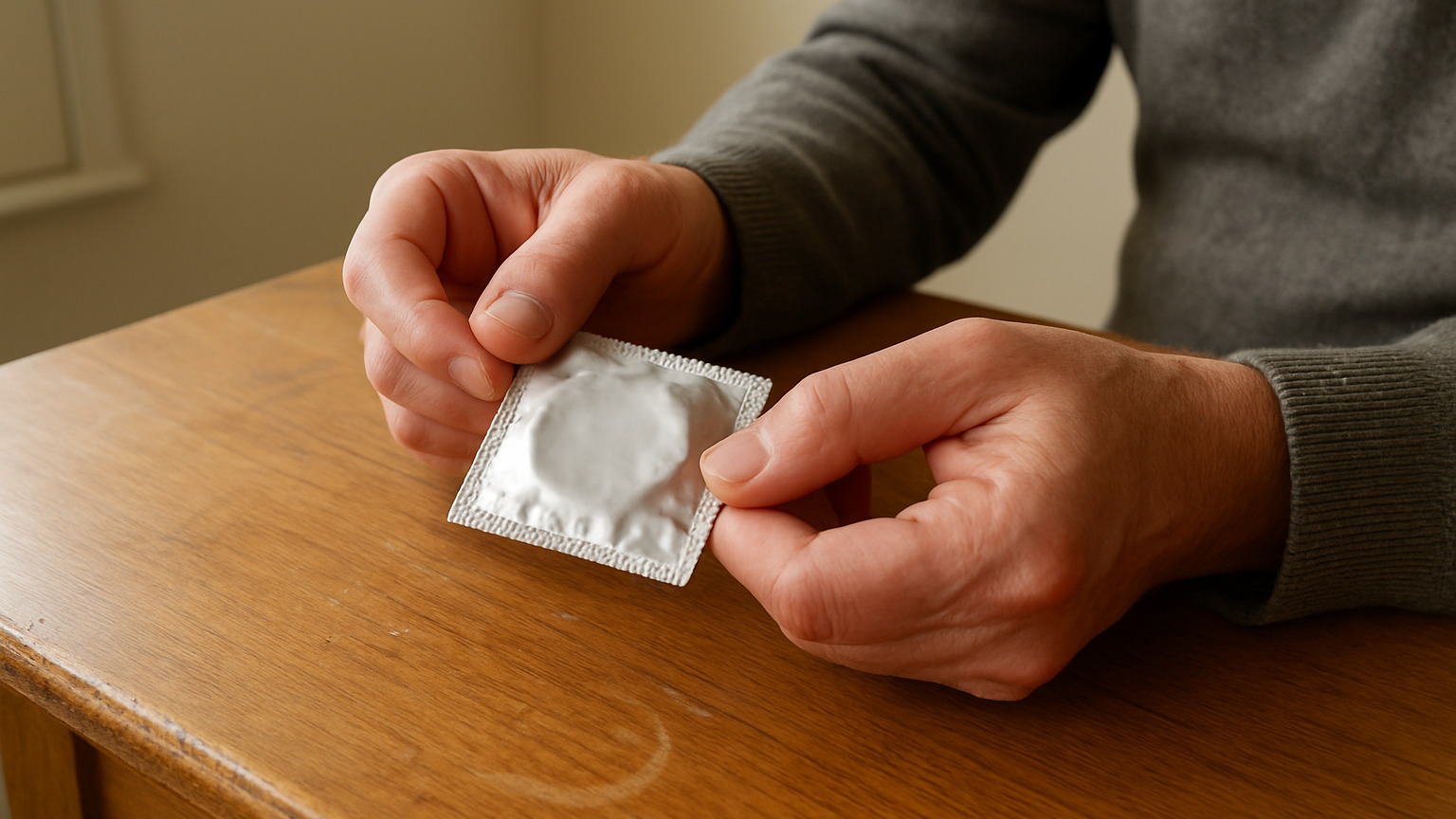
The expiry date, printed on both the box and each wrapper. The wrapper itself, which should be intact with no tears, pinholes or creases worn through. And the air bubble: a sealed wrapper should feel slightly inflated when pressed. If it feels flat, the seal has failed and air has escaped, which means the condom has been exposed and should not be used.
How long do they last?
Typically three to five years from manufacture for latex, sometimes less for those containing spermicide, which degrades faster. Polyurethane generally lasts longer. The date on the packet accounts for this, and it assumes proper storage rather than a wallet.
How do you open one?
Push the condom to one side of the wrapper, then tear at the serrated edge. Never use teeth, scissors, keys or a knife, all of which nick the latex in a way you will not see. This is a genuinely common cause of failure and takes no extra time to avoid.
What should it look like?
A condom should be slightly slippery and flexible. If it is dry, brittle, stiff, discoloured or sticky, it has degraded and should be thrown away. Trust that assessment over the printed date, since storage conditions matter more than the calendar.
Which way round?
The rim should be on the outside so it unrolls easily. If you start rolling and it will not go, it is inside out. Do not flip it and carry on, since the outside has now been in contact with you; take a fresh one. This is a small waste and a real one, which is another argument for having several within reach.
What about condoms from a venue or a hotel?
Usually fine if the packet is intact, in date and feels inflated. Bowls left out in warm rooms for months are the exception, since heat is what degrades them fastest. If in doubt, use your own.
Keeping a usable supply
Buy or collect more than you need so you are never rationing, keep them where you actually have sex rather than in a cupboard, and replace the ones you carry around periodically. Free supplies from clinics and distribution schemes make this straightforward.
Does the same apply to lubricant?
Lubricant has an expiry date too and separates or thickens as it ages. A bottle that has changed consistency or smells different should be replaced. Sachets kept loose in bags tear and dry out, which is another argument for a proper bottle.
What about a partner's supply?
If someone produces a condom from a wallet they have carried for a year, taking one of yours instead is a reasonable thing to suggest and not an insult. Having your own within reach removes the situation entirely.