Working out whether an encounter needs action does not require a calculator. Four questions cover most of it, and answering them honestly gets you to the right next step considerably faster than trying to estimate a probability.
What happened?
Which acts, and whether you were the receptive or insertive partner. Receptive anal sex is the only act carrying substantial HIV risk. Oral sex carries very little HIV risk and substantial bacterial risk. Whether there was bleeding, whether a condom was used and whether it failed, and whether anything caused mucosal damage all matter.
With whom?
What you know about the other person. Known positive with a sustained undetectable viral load means no HIV risk at all. Known positive and not on treatment, or status unknown, means the assessment proceeds. Anything you know about recent infections, recent testing or whether they take PrEP is useful. Unknown is a normal and workable answer.
When?
The single most decision-relevant fact. Within seventy-two hours, PEP is available if HIV exposure is possible and you were not covered by PrEP, and works best within twenty-four. Within twenty-four hours, doxy-PEP applies if you are eligible. Beyond seventy-two hours, the question becomes a testing schedule rather than an emergency.
What was already in place?
Whether you take PrEP and whether you were actually covered, meaning the loading period complete and doses not missed. Which vaccinations you have completed. When you last screened. Someone on PrEP, fully vaccinated and screened six weeks ago is in a very different position from someone with none of that, after an identical encounter.
What follows from the answers?
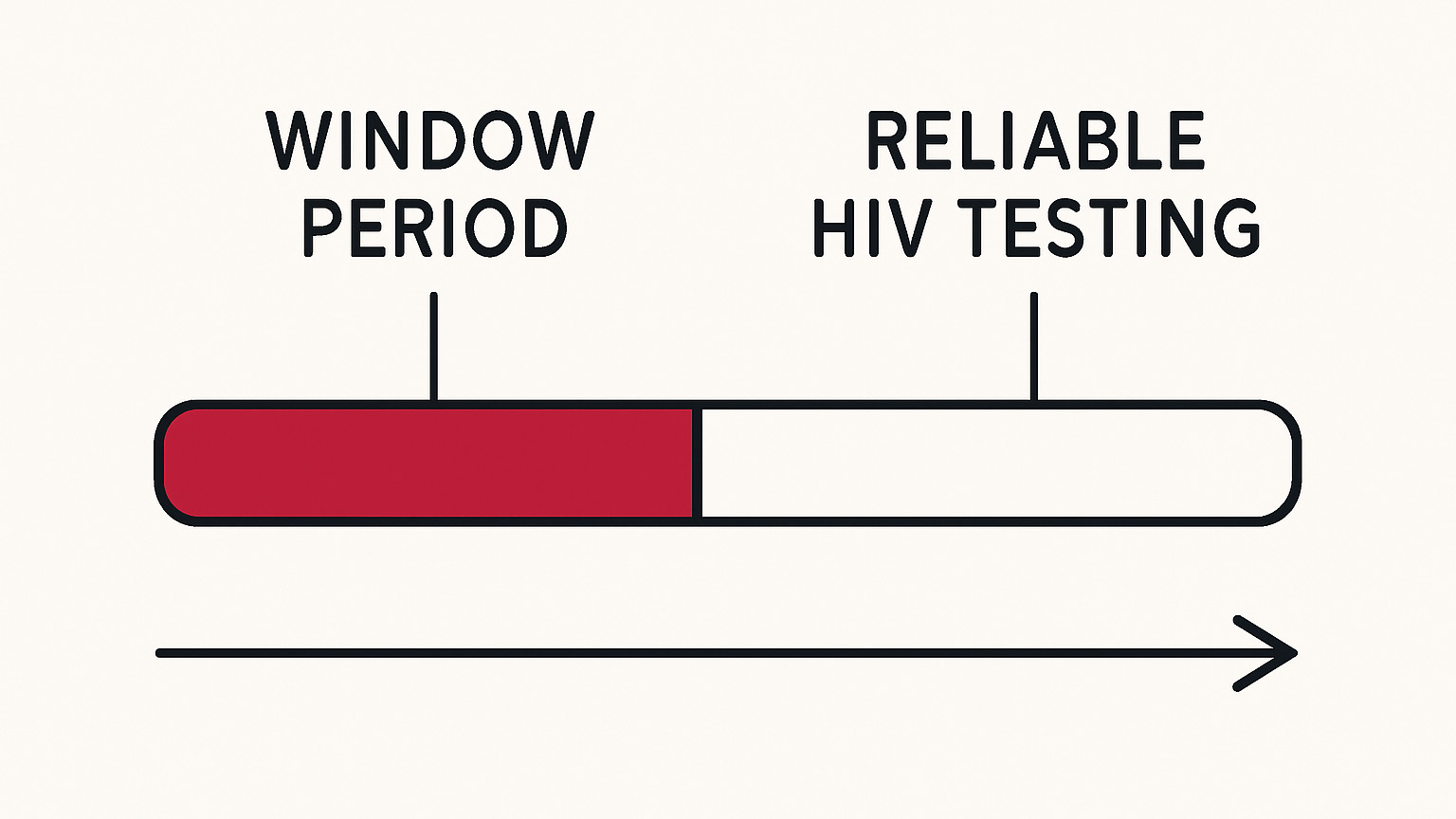
If within seventy-two hours with possible HIV exposure and no PrEP cover, go to a clinic or A&E today. Otherwise, test at two weeks for chlamydia and gonorrhoea at every site you used, six weeks for a laboratory HIV test, and twelve weeks for syphilis and hepatitis. Avoid condomless sex until the HIV result is back.
What is not worth doing?
Searching for per-act probability figures and applying them to your specific evening. Those numbers are population averages from studies conducted largely before PrEP, and they say very little about one encounter with one person. They are useful for understanding a hierarchy and useless for resolving a particular night.
What if you cannot remember clearly?
Common after drinking or drug use, and it does not prevent an assessment. Describe what you do know and let a clinician work with it. Assume the higher-risk version of what you cannot recall rather than the lower one, since that produces the safer plan.
How should you present this at a clinic?
Chronologically and completely, including the parts that feel embarrassing. Staff are interested in the timeline and the acts because those determine which tests and which treatment. An edited account produces a worse decision, and nobody is recording a judgement.
The version to keep in mind
What, with whom, when, and what was already covering you. Four answers and the next step is usually obvious.
What if a partner tells you something afterwards?
A partner disclosing a recent diagnosis, or that they are living with HIV, changes the assessment and is worth acting on rather than resenting. If they are undetectable, there is no HIV risk. If they have been diagnosed with something bacterial, tell the clinic what it was, because contacts are often treated presumptively rather than waiting for results.
Does it help to write it down?
Yes, particularly if the encounter involved drinking or drugs. A short note of the date, what happened and what you know about the person makes the clinic conversation faster and stops the details blurring over the following weeks.
When should you just go rather than assess?
Any time you are within seventy-two hours and unsure. The assessment takes a few minutes at a clinic and costs nothing, and doing it there rather than at home avoids talking yourself out of a window that closes.